
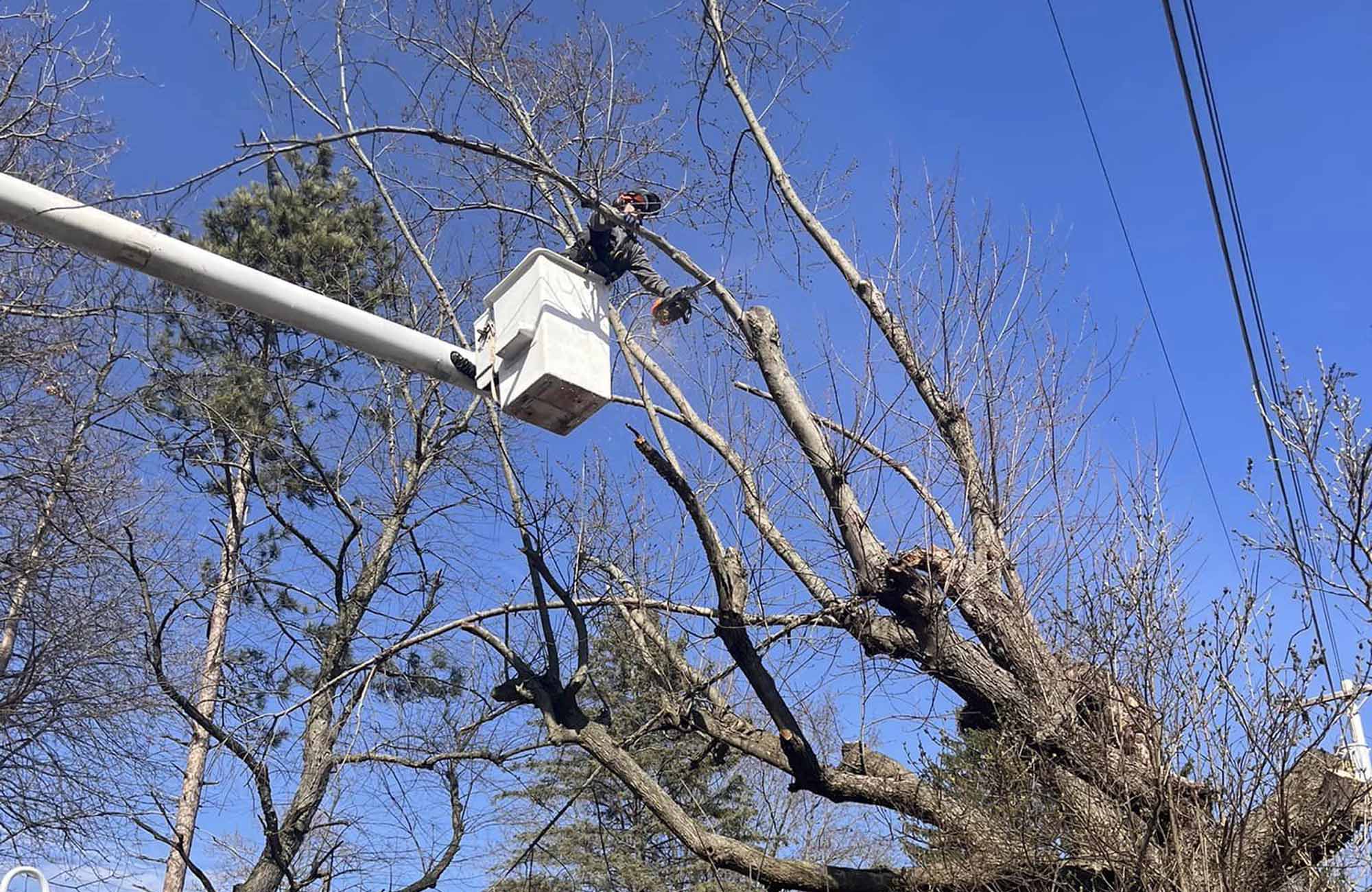
Professional Tree Removal Services in South Central Michigan
Trees are valuable features of residential, commercial, agricultural, and wooded properties, but there are situations when removal becomes the safest or most practical option. Dead trees, storm damage, structural instability, disease, poor placement, and future construction can all create a need for professional tree removal.
Farrell Enterprises provides professional tree removal services for homeowners, businesses, property managers, farms, and landowners throughout Jackson, Hillsdale, and surrounding South Central Michigan communities. Our team handles projects ranging from individual residential trees to large, difficult removals near homes, commercial buildings, driveways, barns, fences, and other structures.
Every tree removal project is different. Before work begins, we evaluate the tree’s size, condition, direction of lean, surrounding structures, equipment access, terrain, and available working space. From there, we determine an appropriate removal method designed to protect the property and safely manage the weight and movement of the tree.
Whether you are dealing with a hazardous tree, cleaning up after a storm, or preparing land for a future project, Farrell Enterprises can help determine the right next step.
When Is Tree Removal Necessary?
Not every damaged or overgrown tree needs to be removed. In some cases, trimming or preventative maintenance may be enough to address the problem.
Removal may be the better option when the tree can no longer remain safely or practically on the property.
Common reasons for tree removal include:
- The tree is dead or severely declining
- Major limbs have died or broken
- The trunk contains significant cracks or decay
- The tree has begun leaning toward a structure
- Roots have shifted or become unstable
- Storm damage has compromised the tree
- A tree has outgrown the available space
- Branches repeatedly interfere with roofs or buildings
- The tree is located within a future construction area
- The tree interferes with a driveway or access route
- The tree creates an ongoing safety concern
- The tree must be removed as part of a land clearing project
A professional evaluation can help determine whether removal is necessary or whether the tree can continue to be maintained safely.
Hazardous Tree Removal
Hazardous trees can threaten homes, vehicles, businesses, outdoor areas, and people.
A tree does not have to be completely dead to become dangerous. Structural problems may develop gradually and can sometimes be difficult to recognize from the ground.
Warning signs may include:
- Large dead branches
- Cracks in the trunk
- Splits between major limbs
- Hollow or decaying areas
- Mushrooms or fungal growth near the base
- Exposed or lifting roots
- A sudden or increasing lean
- Significant canopy dieback
- Broken branches remaining in the canopy
- Damage following severe weather
The location of the tree is just as important as its condition. A weakened tree standing beside a house, parking lot, sidewalk, barn, or driveway presents a greater concern than a similar tree located in an isolated section of wooded property.
Removing hazardous trees under controlled conditions can help reduce the risk of unexpected failure and property damage.
Large Tree Removal
Mature trees can contain an enormous amount of weight in their trunks and branches. Removing them requires careful planning, especially when buildings or other obstacles limit the available drop zone.
Large tree removal may involve:
- Sectional removal
- Ropes and rigging systems
- Aerial equipment
- Controlled lowering of branches
- Crane-assisted removal where appropriate
Instead of allowing an entire tree or large limb to fall freely, sections can be removed in a planned sequence and moved away from surrounding structures.
Factors that affect the removal plan include:
- Tree height
- Trunk diameter
- Canopy size
- Tree species
- Structural condition
- Direction of lean
- Ground conditions
- Equipment access
- Distance from buildings
- Utility lines
- Nearby trees
- Fences and landscaping
Large tree removal should not be approached as a one-size-fits-all process. The method should be based on the actual conditions of the property.
Difficult Tree Removal Near Homes and Buildings
Some of the most challenging removals involve trees growing close to homes, garages, barns, commercial buildings, decks, fences, and neighboring properties.
These trees may have branches extending over roofs or other areas where dropping large sections is not practical.
A controlled removal plan may be necessary when:
- A tree stands between buildings
- Branches extend over a roof
- The tree is close to a neighboring property
- There is limited equipment access
- Landscaping must be protected
- The tree is leaning toward a structure
- The available drop zone is very small
Careful planning helps reduce unnecessary impact to the surrounding property while allowing the tree to be dismantled safely.
Storm-Damaged Tree Removal
Severe weather can quickly change the condition of a tree.
Strong winds, thunderstorms, heavy snow, ice, lightning, and saturated soil can cause trees to split, uproot, lean, or lose major limbs.
Storm-damaged trees can be especially dangerous because branches and trunks may be under tension or partially supported by surrounding trees and structures.
Farrell Enterprises provides 24/7 emergency tree services for urgent situations involving:
- Fallen trees
- Trees on homes or buildings
- Large broken limbs
- Blocked driveways
- Trees leaning after a storm
- Hanging branches
- Storm debris blocking access
- Trees damaged around commercial property
If a tree or branch is touching electrical lines, stay away from the area and contact the utility provider. Never approach or attempt to move a tree that may be in contact with an energized line.
Tree Removal After Storms
Not every damaged tree needs immediate removal, but a post-storm inspection can help identify problems that may not be obvious from the ground.
A tree may still be standing but contain:
- Hidden cracks
- Split branch unions
- Partially detached limbs
- Root movement
- A changed lean
- Significant canopy loss
Addressing these issues early can prevent a damaged tree from becoming a larger problem during the next storm.
In some cases, selective trimming may be sufficient. In others, the damage may be extensive enough that complete removal is the safer long-term choice.
Tree Removal for New Construction
Tree removal is often one of the first steps in preparing property for construction.
Trees may need to be removed for:
- New homes
- Garages
- Pole barns
- Commercial buildings
- Home additions
- Driveways
- Private roads
- Septic systems
- Utility installation
- Parking areas
- Agricultural structures
When construction is planned, it is important to consider more than just the visible trunk.
Stumps, roots, and surrounding vegetation can also interfere with excavation, grading, foundations, and access.
For larger projects requiring removal of multiple trees and vegetation, our land clearing services may provide a more complete solution.
Residential Tree Removal
Homeowners contact Farrell Enterprises for tree removal for many different reasons.
A tree may be creating concerns because it:
- Hangs over the roof
- Is growing too close to a garage
- Drops large dead branches
- Blocks a driveway
- Has suffered storm damage
- Is leaning toward the house
- Interferes with landscaping plans
- Has become too large for the property
- Prevents a future addition or outdoor project
Residential tree removal often requires careful attention to surrounding structures and landscaping.
Before beginning work, we consider fences, sheds, patios, decks, neighboring property, septic systems, driveways, gardens, and other features that may affect access or removal.
Commercial Tree Removal
Businesses and commercial property managers face additional concerns because trees may be located near employees, customers, tenants, parked vehicles, sidewalks, signs, and building entrances.
Commercial tree removal may be needed around:
- Retail properties
- Offices
- Apartment buildings
- Industrial facilities
- Warehouses
- Parking lots
- Churches
- Rental properties
- Commercial development sites
Removing a hazardous or poorly located tree can improve safety, maintain visibility, protect buildings and vehicles, and prepare commercial property for future expansion.
Work can also be planned with normal property operations in mind.
Tree Removal for Farms and Rural Properties
Tree removal needs on farms and rural acreage can differ significantly from those on smaller residential lots.
Trees may need to be removed because they interfere with:
- Barns
- Agricultural buildings
- Field access
- Farm lanes
- Equipment movement
- Fences
- Pastures
- Future construction
Large rural properties may also contain dead or damaged trees along trails, roads, or frequently used areas.
Farrell Enterprises can address individual trees as well as broader land management projects involving tree removal, land clearing, forestry mulching, or logging.
Lakefront and Limited-Access Tree Removal
Lakefront and wooded properties often require additional planning because trees may be located on slopes, between a home and the water, or in areas where heavy equipment cannot easily reach.
Trees may also be close to:
- Docks
- Decks
- Patios
- Retaining walls
- Shoreline areas
- Neighboring homes
- Narrow driveways
In these situations, sectional removal, rigging, or other controlled methods may be necessary.
The goal is to remove the tree while minimizing unnecessary disturbance to surrounding vegetation, landscaping, and shoreline areas.
Crane-Assisted Tree Removal
Certain large or difficult trees may benefit from crane-assisted removal.
A crane can support heavy branches or trunk sections before they are cut and move them to a designated processing area.
Crane assistance may be considered when:
- A tree is extremely large
- Branches extend over a building
- The tree is structurally unstable
- Ground-level drop zones are limited
- Large sections need to be moved over obstacles
- Traditional rigging would be inefficient or impractical
A crane is not necessary for every large tree. The appropriate removal method depends on the property, tree condition, equipment access, and surrounding obstacles.
What Happens to the Tree After Removal?
Tree removal produces a significant amount of material, including:
- Logs
- Large branches
- Smaller brush
- Wood chips
- Sawdust
- Stump material
How this material is handled depends on the project.
Options may include cutting logs into manageable sections, chipping branches, hauling selected material away, or leaving agreed-upon wood for the property owner.
Cleanup expectations should be discussed before work begins so the intended finished condition of the property is clear.
Stump Grinding After Tree Removal
Tree removal does not automatically eliminate the stump.
After the tree has been taken down, property owners can decide whether the stump should remain or be ground below ground level.
Professional stump grinding services can help when the stump:
- Interferes with mowing
- Creates a tripping hazard
- Takes up usable lawn space
- Prevents new landscaping
- Conflicts with a walkway or fence
- Makes the property look unfinished
Standard stump grinding removes the visible stump and selected material below ground level but does not excavate the entire root system.
If construction is planned directly in the stump area, additional site preparation may be necessary.
Tree Removal vs. Tree Trimming
Tree removal is not always the best solution.
Preventative maintenance may allow a healthy tree to remain in place when the concern involves:
- A few dead branches
- Low limbs
- Branches touching a building
- Uneven canopy growth
- Minor storm damage
Professional preventative tree maintenance can help reduce hazards and preserve desirable mature trees.
Complete removal is generally considered when the tree’s structural condition, location, or level of damage makes continued maintenance impractical.
What Affects the Cost of Tree Removal?
Tree removal prices vary considerably because each project presents different challenges.
Important factors can include:
- Tree height
- Trunk diameter
- Tree species
- Condition of the tree
- Direction of lean
- Number of branches
- Proximity to structures
- Equipment access
- Terrain
- Utility lines
- Available drop zone
- Whether crane assistance is needed
- Debris handling
- Whether stump grinding is included
A smaller tree in an open field may be relatively straightforward, while a similarly sized tree between a home and garage may require substantially more planning and labor.
An on-site evaluation provides the best way to determine the actual scope of work.
Our Tree Removal Process
1. Evaluate the Tree
The process begins by assessing the tree and surrounding property.
We look at the tree’s condition, size, lean, branch structure, root area, access, terrain, and nearby obstacles.
2. Develop a Removal Plan
The removal method is chosen based on site conditions.
The tree may be felled in a controlled direction when adequate space exists or dismantled in sections when the work area is limited.
3. Prepare the Work Area
Before cutting begins, the work area is organized to help protect people, buildings, vehicles, landscaping, and other property features.
4. Remove the Tree
The tree is removed using the method appropriate for the site.
Large or difficult projects may involve rigging, aerial equipment, sectional removal, or crane assistance.
5. Process Debris
Branches and trunk sections are processed according to the agreed project scope.
6. Address the Stump
If stump grinding is requested, the remaining stump can be ground after the tree has been removed.
7. Complete Site Cleanup
The work area is cleaned according to the scope discussed before the project begins.
Why Professional Tree Removal Matters
Tree removal involves significant weight, height, cutting forces, and unpredictable movement.
Attempting to remove a large tree without the proper equipment and experience can result in serious injury or property damage.
Professional tree removal provides several important advantages:
- Controlled removal methods
- Specialized equipment
- Experience working around structures
- Better management of large branches and trunk sections
- Appropriate debris handling
- Safer work around damaged trees
This becomes increasingly important when a tree is large, leaning, damaged, or located close to valuable property.
Tree Removal in Jackson, MI
Farrell Enterprises provides professional tree removal throughout Jackson, Michigan, for homeowners, businesses, farms, property managers, and landowners.
Jackson-area projects range from residential tree removal and storm cleanup to commercial work, large-tree removal, land clearing, and removal associated with new construction.
Visit our Jackson location page to learn more about tree and land services available in the Jackson area.
Tree Removal in Hillsdale, MI
Tree removal is also one of our primary services throughout Hillsdale and Hillsdale County.
We work with residential properties, farms, businesses, rural acreage, and wooded land throughout the area.
Visit our Hillsdale location page for additional information about tree services available in Hillsdale.
Tree Removal Throughout South Central Michigan
Farrell Enterprises provides tree removal throughout South Central Michigan, including Jackson, Hillsdale, Brooklyn, Napoleon, Jonesville, Hanover, Somerset, Onsted, Spring Arbor, Jerome, North Adams, Addison, Concord, and surrounding communities.
Our service area includes residential neighborhoods, commercial properties, farms, lakefront homes, rural acreage, wooded lots, and undeveloped land.
Visit our Locations page to learn more about the communities we serve.
Why Choose Farrell Enterprises?
Tree removal is often only one part of a larger property project.
Farrell Enterprises also provides:
- Preventative tree maintenance
- Emergency tree services
- Stump grinding
- Land clearing
- Forestry mulching
- Logging
- Firewood
This allows us to look at the overall needs of the property.
A storm-damaged tree may require emergency removal followed by stump grinding. A construction project may involve several tree removals along with land clearing. A rural property may need hazardous trees removed while other areas are managed with forestry mulching.
Our goal is to recommend a practical approach